
- Dec 5, 2025
Starting a School Garden: A Beginner Teacher’s Journey into Outdoor Learning
- Lauren MacLean
I'm Not a Gardener... Yet
Do you ever hear people say they’re bad at something, even though you know them to be good at it? Well, I say this with all the humility I can muster: I’m not a gardener. Houseplants and I have a strained relationship at best. It’s very much a one-way street—I love them, but they seem to reject the love and care I give. On the bright side, that means there’s only one direction to go from here: up.
What if...
Our school was lucky to receive some grants from the district and donations from our parent advisory committee, which allowed a group of teachers to request garden beds for a small grassy area near the school. I was amazed at how quickly our district gardeners installed them! But as I watched the beds take shape, my panic set in faster than I expected. Gardening! What if I’m terrible at it? What if I ruin it all?
Tiny Seeds, Big Fears
I’ll admit it—the thought of tiny seeds, delicate sprouts, and mysterious pests makes me nervous. What if I overwater? What if I forget to water at all? What if my plants just… die? Yet every time I step into the garden, I’m reminded that gardening isn’t about perfection—it’s about curiosity, patience, and celebrating the small triumphs along the way. Even if I’m unsure, I’m learning alongside my students, discovering that sometimes fear is just the first step toward growth.
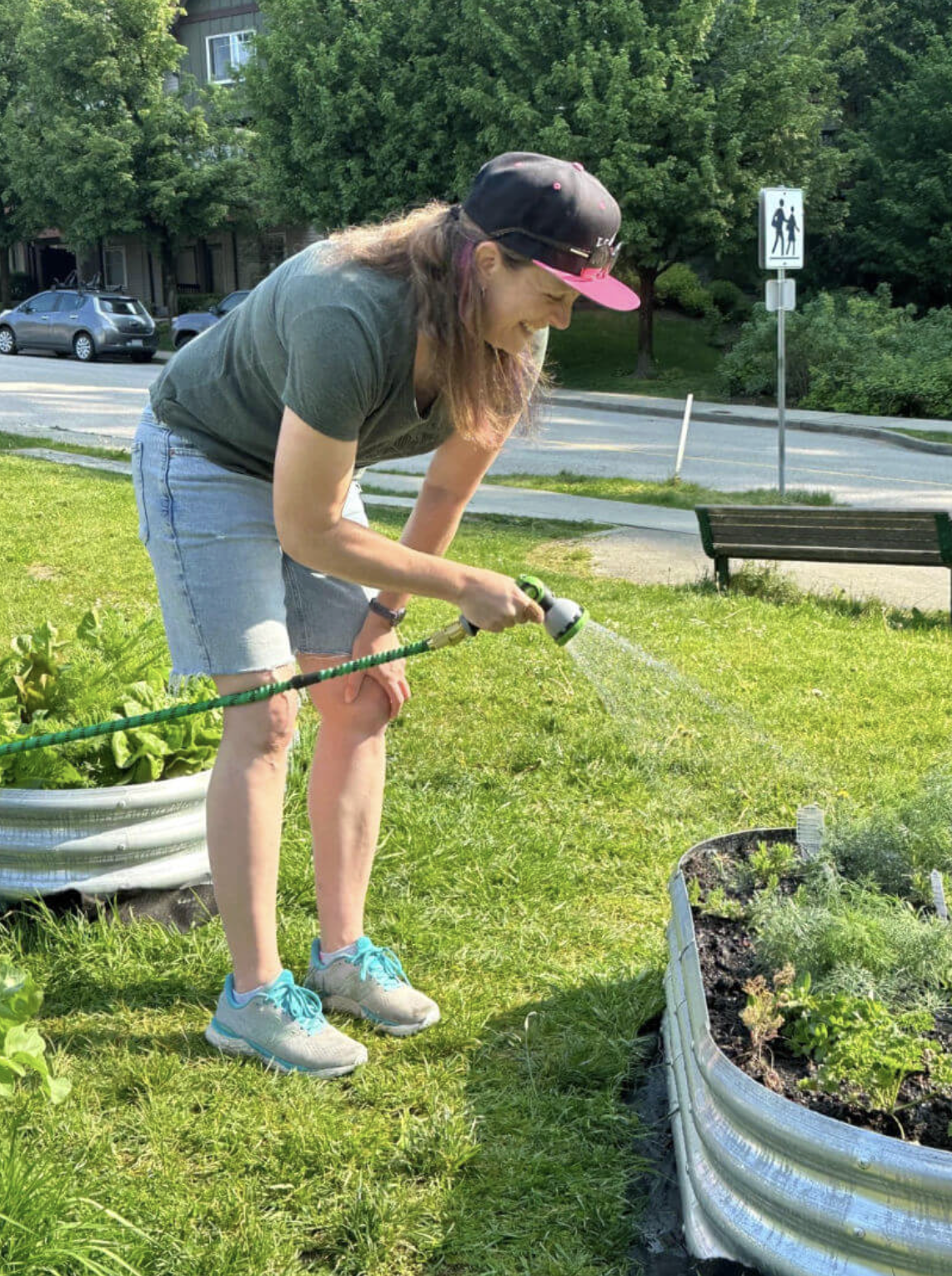
No Stranger To Getting My Hands Dirty
Outdoor learning has been part of my teaching journey for most of my career. Reflecting on it, I realize I grew up “in the wild”—exploring ditches, catching tadpoles and garter snakes. As an adult, I apprenticed at a local nature school with a wonderful nature mentor, and I am grateful that our relationship continues to this day.
I am comfortable getting my hands dirty, following nature’s rhythms, and letting learners’ passions guide inquiries. I don’t always have all the answers—and I don’t think that’s my role. Instead, I listen, guide, and create opportunities for exploration. This mindset is especially helpful in the garden, where unpredictability is part of the process.
Our Garden Classroom
So, how do I navigate this new learning environment? We call it our Garden Classroom, so learners and the community recognize it as a valid learning space—one tip I learned from Megan Zeni (meganzeni.com). Here, our routines and expectations mirror those inside our classroom walls: we listen respectfully at circle time, encourage discussion, value curiosity and inclusion, treat everyone with kindness, and do no harm. These consistent expectations help learners feel calm, confident, and comfortable in a new space.
We have 6 garden beds, 2 hoses, a set of garden tools, 3 watering cans, and an endless supply of enthusiasm from learners, families, and educators. Will I make mistakes along the way? Absolutely. But I’m excited to learn alongside my students. Excuse the pun—but together, we will be growing in more ways than one.